


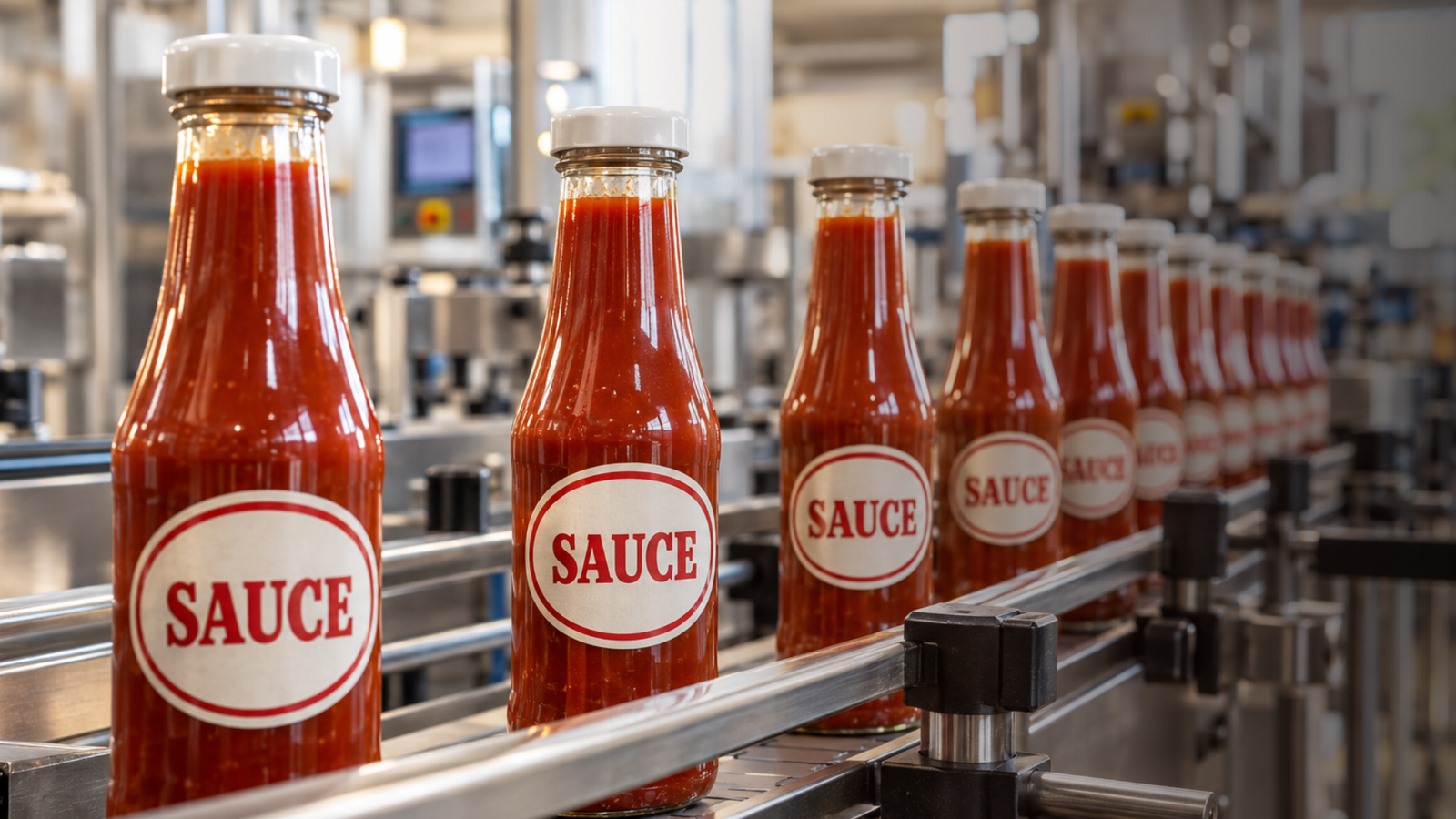
Your Sauce Line Doesn’t Need to Look Like Heinz’s
Right-Sized Sauce Packaging Lines: Why Bigger Isn't Better
Most sauce manufacturers hit the same wall on their way to their first (or fifth) major automation decision: finding a line built for their actual volume, not someone else's. Finding a sauce packaging line built for your actual volume usually isn't a supply problem, equipment exists across a wide range of capacities and speeds. It's a research problem. Sorting through that range to land on the line that matches current output and near-term growth is often a long process, and not all project managers have a clear map of what's actually out there or how those machines compare. And that range is wide. A compact line built for a small-batch producer running a few thousand jars a month looks nothing like a rotary system built to run 500,000 units a week: different footprint, different automation level, different price point entirely.
Both are legitimate answers depending on where a manufacturer actually is; the difficulty is knowing which end of that range applies to you, and what the step between them looks like when you're ready for it. That's usually where an OEM or distributor carrying a genuine range of capacities becomes more useful than researching machine by machine, brand by brand, they can point to what fits now versus what fits in two years, rather than defaulting to whatever they happen to sell. Link Pack works this way as both a manufacturer and a distributor: sourcing or custom-designing equipment across viscosity and speed requirements, with service handled directly rather than through a separate vendor once the line is running. There's a better starting point: size the line to where you are now, and build it so it doesn't become dead weight when you grow.
