

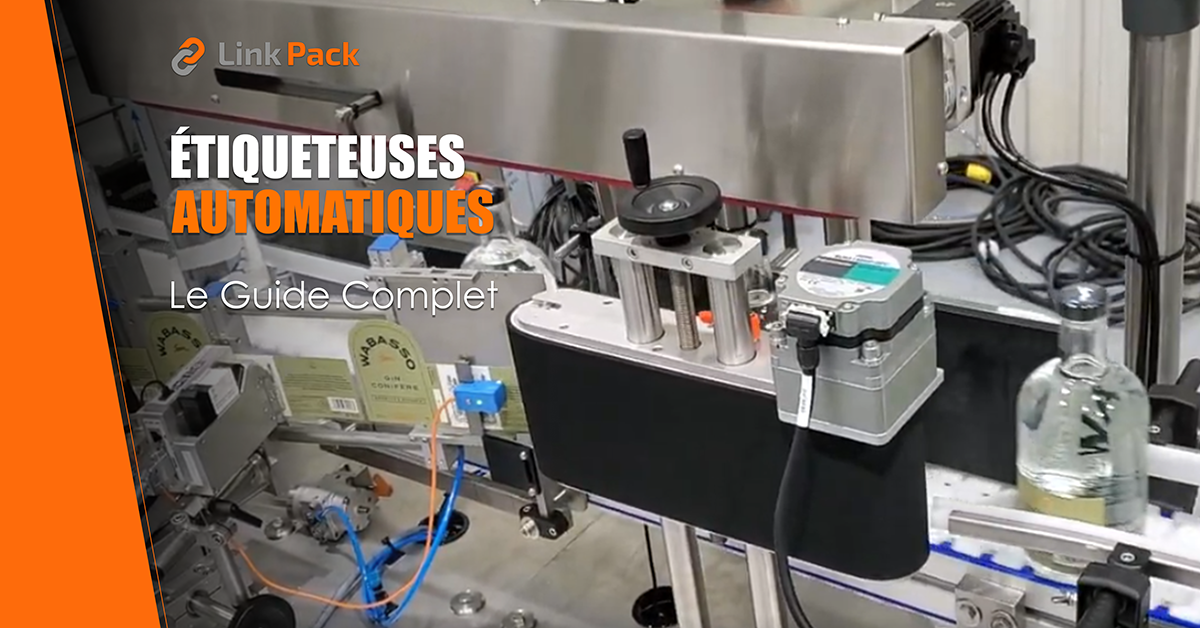
Étiqueteuses Automatiques Linéaires: Le Guide Complet pour les Manufacturiers au Québec et au Canada
Construction en acier inoxydable, composants de haute qualité, conçu pour durer et soutenu par un service local canadien.
Tout ce que les fabricants québecois et Canadiens doivent savoir avant d’acheter.
Une étiqueteuse est l’un des équipements les plus sollicités de votre ligne d’emballage. Elle tourne à chaque quart de travail, gère chaque SKU, et touche chaque unité qui quitte votre usine. Bien choisie, elle disparaît dans votre opération. À l’inverse, un équipement mal choisi, de qualité de construction médiocre et sans véritable service après-vente vous oblige à gérer les problèmes plutôt que votre production.
Ce guide est écrit pour les manufacturiers québécois et canadiens qui veulent acheter une fois, acheter correctement, et avoir une machine qui performe encore dans dix ans.
- Qu’est-ce qu’une étqiueteuse linéaire automatique?
- Types d’étqieuteuses automatiques
- Table de compatibilité des contenants
- Tableau de vitesses et cadences
- Applications par industrie
- Linéaire vs rotatif: quoi choisir
- Les specs qui comptentn vraiment
- Certification CSA : ce que les manufacturiers canadiens doivent savoir
- Ce qui fait une étiqueteuse rentable à long terme
- Questions fréquentes
1. Qu’est-ce qu’une étiqueteuse linéaire automatique?
Une étiqueteuse linéaire automatique applique des étiquettes autocollantes (pressure-sensitive) sur des produits qui avancent en ligne droite sur un convoyeur. La machine contrôle l’espacement des contenants, leur orientation et le positionnement de l’étiquette sans intervention manuelle. Un contrôle constant de votre cadence de production, contenant après contenant.
Le terme « linéaire » désigne la façon dont les contenants traversent la machine : en ligne droite, en file unique. Cela la distingue des étiqueteuses rotatives, qui font circuler les contenants sur un carrousel circulaire pour un traitement simultané à haute vitesse. Pour la grande majorité des manufacturiers québécois et canadiens qui gèrent plusieurs SKUs ou des volumes intermédiaires, l’étiqueteuse linéaire est le bon outil. Il est plus flexible, plus facile à entretenir, et beaucoup plus simple lors du changement de format (changeover) entre les produits.
Les étiqueteuses linéaires représentent environ 50 % de toutes les machines d’étiquetage vendues en Amérique du Nord. Pour leur part, les systèmes rotatifs qui ne représentent que 3 à 5 %. La domination des étiqueteuses linéaires s’explique par leur capacité à servir la plus grande variété de manufacturiers et de contenants : des bouteilles et canettes standards jusqu’aux chaudières, sachets, tubes et même des surfaces irrégulières. Link Pack conçoit des solutions d’étiquetage linéaire pour pratiquement tous les types de contenants, y compris un prototype assisté par cobot capable d’appliquer des étiquettes avec précision dans des surfaces concaves ou en relief qu’aucune étiqueteuse conventionnelle ne peut atteindre.
Une étiqueteuse linéaire configurée pour vos besoins appliquera vos étiquettes avec précision à chaque fois et s’intégrera parfaitement au reste de votre ligne d’emballage — sans nécessiter un investissement à six chiffres ni un projet d’installation de 12 mois.
2. Types d’étiqueteuses automatiques
Toutes les étiqueteuses linéaires ne font pas le même travail. Le type dont vous avez besoin dépend de la forme de votre contenant, du nombre de faces à étiqueter, et de l’endroit sur le contenant où l’étiquette doit être appliquée.
Étiqueteuses recto-verso
Appliquent deux étiquettes simultanément sur les faces opposées d’un contenant. Idéales pour les bouteilles rectangulaires, pots ou contenants nécessitant une étiquette produit devant et un panneau réglementaire/nutritionnel derrière. Très courantes en alimentation, pharma et produits de santé naturels.
Étiqueteuses de dessus
Appliquent une étiquette plate sur la face supérieure d’un contenant tels que les couvercles, barquettes, chaudières, plateaux ou emballages plats. Souvent utilisées en restauration collective, produits frais et applications industrielles. Peuvent être configurées avec une tête d’impression (print head) pour les données variables (lot codes, dates de péremption).
Étiqueteuses dessus-dessous
Appliquent des étiquettes sur le dessus et le dessous d’un contenant simultanément. Très répandues dans plusieures industries CPG ou l’étiquetage sur les deux faces d’un produit est requis.
Étiqueteuses latérales
Appliquent des étiquettes sur un ou deux côtés plats de contenants carrés ou rectangulaires. Elles sont couramment utilisées en emballage industriel, notamment pour les bidons rectangulaires à poignée intégrée et l’étiquetage de boîtes en fin de ligne.
Étiqueteuses enveloppantes
Appliquent des étiquettes qui s’enroule partiellement ou complètement autour d’un contenant cylindrique. Très répandues sur les bouteilles rondes, pots et canettes dans les secteurs alimentaire, boisson, cosmétique et chimique.
Étiqueteuses pour chaudières et seaux
Étiqueteuses linéaires spécialisées conçues pour la géométrie des chaudières, seaux et contenants grand format. Conçues pour les formes lourdes et non standard. Link Pack fabrique des étiqueteuses pour chaudières dans les secteurs des revêtements, de la restauration industrielle et de l’industrie chimique.
Étiqueteuses pour sachets et sacs
Appliquent des étiquettes sur les emballages flexibles tels que les sachets plats, sachets à soufflet (stand-up pouches) et sacs. Elles nécessitent des guides pour stabiliser le contenant flexible pendant l’application. Très utilisées en cannabis, collations, aliments pour animaux et soins personnels.
Étiqueteuses de timbres d’accise / timbres fiscaux ou d’étiquettes d’inviolabilité
Appliquent des timbres d’accise ou fiscaux exigés par le gouvernement, ou des étiquettes d’inviolabilité, sur des produits de cannabis et alcoolisées réglementés. Elles permettent d’appliquer les timbres fédéraux requis sur des tubes de pré-roulés (pre-roll), des sachets, des bouteilles et des canettes avec la précision exigée par la conformité réglementaire. Ces étiqueteuses peuvent également appliquer des étiquettes d’inviolabilité sur tout produit de consommation nécessitant un sceau de sécurité.
3. Compatibilité des contenants par type d’étiqueteuse
Utilisez ce tableau pour associer votre contenant à la configuration d’étiqueteuse dont vous avez besoin.
Contenant
Enveloppante
Recto-Verso
Dessus
Dessus-Dessous
Position C, U or L
Latéral
Multi-Panneaux
Sachets et sacs
—
—
—
—
—
—
Barquettes
—
—
✔
✔
✔
—
—
Bouteilles & Pots
✔
✔
✔
✔
✔
—
✔
Tubes
✔
✔
—
—
✔
—
—
Cannettes en aluminum
✔
✔
✔
—
—
—
—
Seaux & Chaudières
✔
✔
✔
✔
✔
—
—
Boîtes
—
✔
✔
✔
✔
✔
✔
4. Référence vitesse et cadence
Les exigences de vitesse sont l’une des inadéquations les plus fréquentes entre ce qu’un manufacturier achète et ce dont il a réellement besoin. La bonne étiqueteuse n’est pas la plus rapide mais celle qui correspond à la vitesse de votre ligne, de votre remplisseuse en amont et de votre poste d’emballage en aval, sans créer de goulot d’étranglement.
Volume de production
Plage de vitesses
Format de machine
Faible volume / petits lots
20–40 unités/min
Étiqueteuse Linéaire
Link Pack
Production intermédiaire
40–100 unités/min
Automatic linear labeler
Link Pack
Production à haut volume
100+ unités/min
Automatic Rotary Labeler
5. Applications par industrie
Les étiqueteuses linéaires fabriquées par Link Pack sont déployées dans un large éventail d’industries. Voici les applications les plus courantes pour lesquelles nous construisons.
6. Étiqueteuse linéaire vs. rotative
Le choix entre une étiqueteuse linéaire et une étiqueteuse rotative se résume au volume, au nombre de SKUs et au budget. Voici une analyse honnête, incluant le moment où il faut considérer les étiqueteuses rotatives Gernep que Link Pack distribue partout au Canada et aux États-Unis.
Critère
Étiqueteuse linéaire
Étiqueteuse rotative
Vitesse
Jusqu’à 100 containants/min
100+ containants/min
Flexibilité SKU
Changements de format facile
Pièces de changement de format requiert
Variétée de contenants
Gère les emballages felxibles et rigides
(bouteilles, sacs, boîtes de conserve, pichets, pots, seaux, sachets, etc.)
Gère les emballages rigides seulement (bouteilles, cannettes, bidons, bocaux, seaux, etc.)
Empreinte au sol
Compact — s’intègre dans la plupart des lignes existantes
Plus grand — planification requise pour intégration
Idéal pour
La majorité des manufacturiers canadiens : alimentation, chimique, cannabis, revêtements, cosmétiques
Entreprises de taille moyenne à grande ayant des exigences de production à plus haute vitesse
Disponible chez Link Pack
Fabriquée au Québec, machines en stock disponibles
Distribuée partout au Canada & aux États-Unis
Si vous exploitez une ligne à haut volume mono-SKU, une microbrasserie qui passe à la distribution régionale, un co-emballeur laitier qui étiquette des millions d’unités par semaine — une étiqueteuse rotative Gernep est peut-être la bonne réponse. Link Pack distribue les étiqueteuses rotatives Gernep partout au Canada et aux États-Unis, et peut vous aider à spécifier le bon système pour vos exigences de cadence. En savoir plus sur les étiqueteuses rotatives Gernep.
Pour la majorité des manufacturiers avec plusieurs SKUs, formats de contenants variés et une cadence intermédiaire; une étiqueteuse linéaire bien construite surpassera une rotative en flexibilité, coût et facilité d’opération.
7. Les specs qui comptent vraiment à l’achat
Les fiches techniques peuvent être difficiles à comprendre. Voici les données qui détermineront vraiment si une machine fonctionnera sur votre ligne — et ceux qui relèvent surtout du marketing.
Dimensions de contenants (diamètre et hauteur)
Le diamètre et la hauteur minimum et maximum que la machine peut gérer, c’est non négociable. Si votre contenant est hors de cette plage, certains OEMs pourront personaliser la machine. Confirmez toujours avec vos dimensions réelles, pas votre produit « typique ». Envoyez des échantillons pour tests.
Taille d’étiquettes
Les dimensions minimum et maximum que la machine peut appliquer. Confirmez avec votre étiquette la plus grande et la plus petite sur tous vos SKUs, pas seulement votre produit principal.
Précision de pose (registration tolerance)
Exprimée en ±mm. Pour la plupart des applications alimentaires et industrielles, ±0,5 mm est facilement atteignable. Pour pharma, cannabis et cosmétiques haut de gamme, visez ±0,2 mm ou mieux. C’est exactement ce que les machines équipées d’applicateurs Herma 500 livrent en production.
Vitesse de ligne (unités par minute)
Correspond à la vitesse de votre remplisseuse (filler), au minimum. Prévoyez de la marge pour la croissance. Une étiqueteuse qui approche seulement votre vitesse actuelle engendrera des goulots d’étranglement.
Diamètre et mandrin (core) du rouleau d’étiquettes
Le mandrin (core) standard pour les étiqueteuses automatiques est de 3 pouces (76 mm). Le diamètre extérieur standard pour la plupart des étiqueteuses semi-automatiques de table est de 8 pouces (200 mm) ; les machines automatiques de gamme intermédiaire acceptent jusqu’à 12 pouces (300 mm). Les applicateurs Herma 500 offrent des options jusqu’à 600 mm. Des rouleaux plus grands signifient moins de changements et moins d’interruptions de ligne. Confirmez toujours avec votre fournisseur d’étiquettes afin d’éviter une incompatibilité.
Temps de changement de format
Souvent négligé. Si vous gérez plusieurs SKUs, le temps de changement de format (changeover) par SKU impacte directement votre capacité effective. Demandez une démonstration de changement réelle, pas seulement un temps annoncé. La différence entre 2 minutes et 20 minutes par changement est énorme sur une semaine de production.
Ce qu’il faut relativiser
La vitesse maximale théorique est toujours évaluée dans des conditions idéales. Une évaluation avec vos contenants et étiquettes réels est fortement recommandée. La plupart des OEMs proposeront une démonstration, demandez-la toujours avant de vous engager.
8. Certification CSA : ce que les manufacturiers canadiens doivent savoir
Si vous achetez de la machinerie industrielle pour une utilisation au Canada, la certification CSA (Association canadienne de normalisation) n’est pas optionnelle, c’est une exigence légale et d’assurance pour les équipements électriques industriels dans les environnements de fabrication canadiens.
Beaucoup de machines d’étiquetage vendues au Canada sont fabriquées en Europe ou en Asie et portent des certifications CE ou UL, qui ne sont pas équivalentes à la certification CSA. Importer une machine sans certification CSA signifie une des deux choses suivantes : soit la machine nécessite une certification sur le terrain (field certification) par un inspecteur autorisé de l’Autorité de sécurité électrique (coûteux, long, et non garanti), soit elle ne peut légalement pas être mise en production dans la plupart des provinces canadiennes.
Chaque étiqueteuse fabriquée par Link Pack au Québec est construite sur un bâti en acier inoxydable soudé avec protections complètes et verrouillages de sécurité — et chaque machine est certifiée CSA. Aucun frais de modification sur le terrain, aucun délai de certification, aucune complication d’assurance. La machine arrive prête à brancher, mettre en service et faire tourner. Elle est construite pour durer, entièrement conforme aux normes de sécurité électrique canadiennes, et supportée par une équipe de service locale qui parle votre langue.
Pour les acheteurs aux États-Unis, les machines Link Pack respectent également les normes UL 508A pour les panneaux de contrôle, les rendant conformes pour un déploiement partout aux États-Unis. Si vous achetez pour des opérations transfrontalières, les machines Link Pack fonctionnent des deux côtés de la frontière sans modification.
9. Ce qui fait une étiqueteuse rentable à long terme
Rien ne compte plus que la rapidité de livraison quand votre ligne est arrêtée et que vous avez besoin d’une machine hier. Mais ce qui coûte le plus cher aux manufacturiers n’est pas une livraison lente, c’est une machine qui n’a pas été construite pour durer ou supportée par un fournisseur difficile à joindre quand quelque chose tourne mal.
La qualité de construction commence par le châssis
Link Pack fabrique ses étiqueteuses linéaires sur des châssis (frames) en acier inoxydable soudés avec protections complètes et verrouillages de sécurité construites selon les normes industrielles. La construction en inox est essentielle dans les environnements alimentaires, chimiques et de revêtements où les lavages (washdowns), l’humidité et l’exposition chimique sont une réalité quotidienne. Un châssis en acier peint qui semblait bien à l’installation a une allure très différente après deux ans sur un plancher de production.
Le choix des composants : la différence entre une machine et une plateforme
La plupart des machines d’étiquetage utilisent des composants industriels standard pour les entraînements (drives), capteurs (sensors) et pneumatiques. La différence significative réside dans quels composants standard un manufacturier choisit, et si ces composants sont reconnus et supportés partout en Amérique du Nord.
Link Pack spécifie par nom : API et IHM Allen-Bradley ou Schneider (PLC et HMI) pour le contrôle machine, pneumatiques Festo, capteurs Keyence ou Sick, applicateurs d’étiquettes Herma 500, et moteurs Oriental Motors. Ce ne sont pas des substituts génériques, ce sont les composants de référence en automatisation industrielle nord-américaine. Chacun d’eux est en stock chez des distributeurs locaux partout au Canada et aux États-Unis. Si quelque chose doit être remplacé un mardi matin, votre équipe de maintenance n’attend pas une livraison internationale. Elle appelle son fournisseur d’automatisation local.
La différence pratique
Là où l’approvisionnement devient un véritable problème, c’est au niveau des outillages spécifiques au format et des pièces de changement de format. Les guides, étoiles de transfert, supports et têtes d’application usinés pour la géométrie de votre contenant. Ces éléments sont propres à la configuration de votre machine, peu importe qui l’a fabriquée. Avec Link Pack, ces pièces sont fournies par l’équipe du Québec qui a fabriqué votre machine, et non par un OEM à l’étranger avec des délais de livraison prolongés et une file d’attente au service après-vente qui ne connaît pas votre ligne.
Service après-vente : local ça change tout
L’équipe de service bilingue (français et anglais) de Link Pack est basée au Québec et intervient partout au Canada. Lorsqu’un problème survient, vous parlez à un technicien qui a construit la machine, et non à un centre d’appels. Un support à distance, avec intervention sur site lorsque nécessaire, sans intermédiaires entre vous et la personne qui connaît votre équipement.
Sur les délais de livraison
Les délais OEM pour les étiqueteuses neuves au Canada et aux États-Unis varient actuellement entre 16 et 52 semaines. Link Pack fabrique au Québec en 16 à 24 semaines. L’entreprise maintient également un inventaire de machines en stock qui peuvent être expédiées en environ une semaine — neuves, certifiées CSA, fabriquées au Canada.
10. Questions fréquentes
Trouvez l'étiqueteuse adaptée à votre ligne
Étiqueteuse linéaire fabriquée au Québec, système rotatif Gernep haute vitesse, ou machine disponible en stock, nous vous aidons à spécifier la bonne solution pour votre contenant et votre cadence.
